INTRODUCTION TO ARCHITECTURE
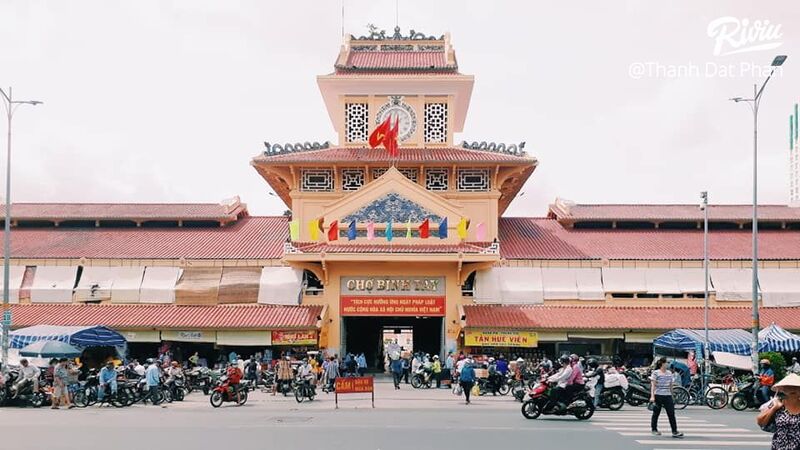
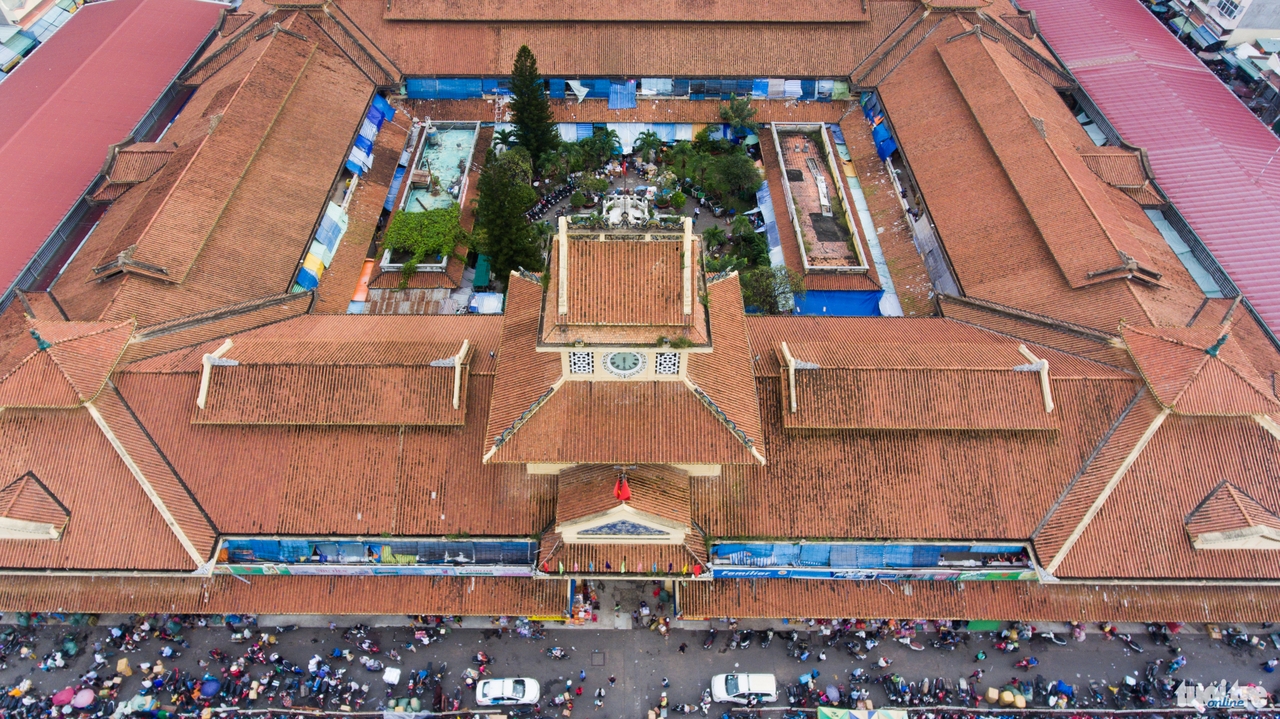
Binh Tay Market has a rectangular premises, including 1 main gate and 12 side gates with an area of more than 17,000 m2 located on a campus of 25,000 m2. The market is surrounded by 4 routes: Thap Muoi - Le Tan Ke - Phan Van Khoe - Tran Binh.
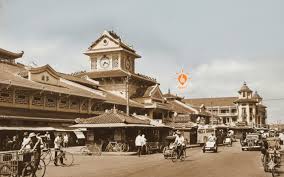
Unique feature of the destination culture Binh Tay Market is built with reinforced concrete according to modern Western techniques at that time but has the bold style of Asian architecture. Binh Tay Market is considered the market with the most beautiful artistic architecture in Ho Chi Minh City.
The rising main tower has four clock faces. The front of the gate has a ceramic mosaic relief of "two dragons flanking pearls". Two dragons flanking pearls in feng shui are used to pray for fortune. The combination of pearl and dragon symbolizes complete prosperity. The entire market roof is covered with yin and yang tiles in an overlapping pattern to create ventilation.
*Lay glass tiles (tube tiles, yin and yang tiles, water extracting tiles, first sentence tiles...) have been associated with Vietnamese architectural works for thousands of years, and can be easily found anywhere in Vietnam.
At the corners of the roof there are curves in the style of an Eastern pagoda.
One of the characteristics of Binh Tay market is that in the middle of the market there is a spacious courtyard planted with airy green trees. There is a stone pedestal built here to credit Mr. Quach Dam who built the market. Around the stone pedestal there are four lions holding pearls and four dragons spraying water. The architecture of the entire market is meant to create prosperity and prosperity for everyone who comes here to do business and buy and sell. Small traders and those who make a living in the market come every day to burn incense and smoke at the altar of Quach Dam - who is considered the God of Wealth of the trading world here - praying for business to go smoothly and smoothly.
BUSINESS SITUATION
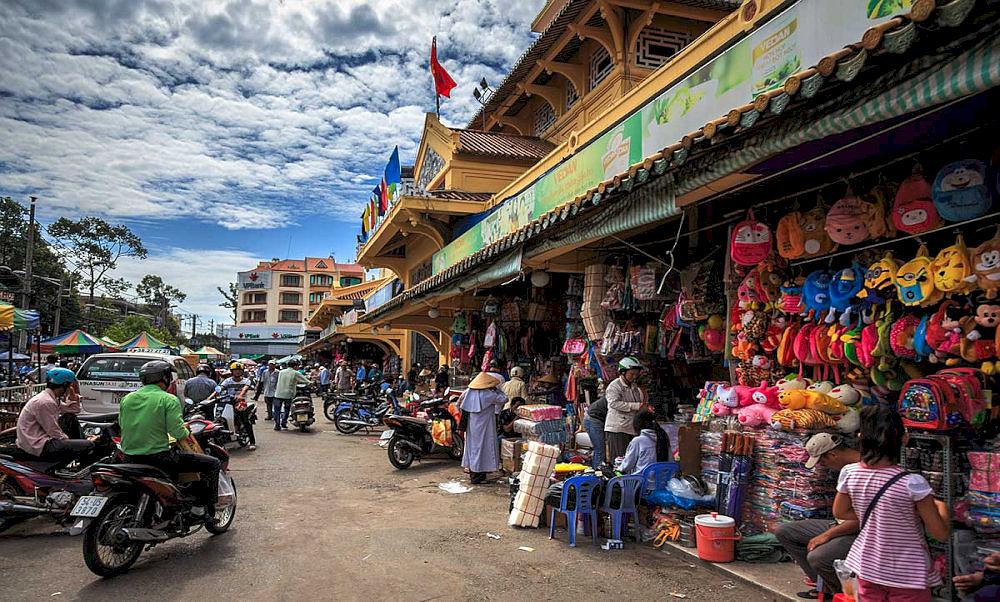
There are currently 2,358 active business stalls with more than 30 product groups including: Spices, Jams, Confectionery, Ready-made clothes, Shoes, Bags, Backpacks, Household appliances, General merchandise, Plated jewelry, Gold and silver gemstones... divided into 5 distinct areas
Ground floor area: (Including Thap Muoi street market facade.)
This place has stalls selling dishes, conical hats and crockery, spices, incense, zinc nails, pictures, bags, shoes, jewelry, phones,...
Floor area:
Including key products such as confectionery, groceries, ready-made clothes,...
Tran Binh area:
Including groups of general spices, high-end seafood, tea, coffee, fresh flowers, fruits, dried nuts (Origin of goods in Binh Duong, Binh Phuoc...)
Le Tan Ke area:
Mainly dried stalls (shrimp, dried fish), grease, betel and areca nuts, Da Lat vegetables, pickles, spices, flour, sugar,... (mostly originating in Western provinces such as Kien Giang, An Giang...)
Phan Van Khoe area:
Currently in the process of researching investment and remodeling to develop culinary tourism at CBT.
Dried seeds: Binh Duong, Binh Thuan, Phan Thiet...
Traditional jam – Western/Eastern region, Ban Me Thuot…
Confectionery/Chocolate: Hanoi
Dried fruits (Jackfruit, banana, mango...): Vinamit Binh Duong
UPGRADE AND REPAIR PROCESS
· In 1992: Binh Tay Market was built an additional floor in the market cage, making the market no longer as high and airy as before but expanding to 748 more stalls.
· In 2006: Binh Tay Market was built with 2 more rows of stalls on Tran Binh and Le Tan Ke streets with iron frames and corrugated iron roofs - expanding an additional 736 stalls.
· Year 2016: This third time was the largest and most methodical renovation, not only bringing a clean, beautiful and modern space for small businesses and people to buy and sell, but also preserving artistic architectural relics - all construction lines and ancient architectural details were restored according to the first prototype in 1928.
(Renovation and repair items at the market include replacing the entire rafters system and re-roofing tiles according to the old model, painting all walls, columns, and ceilings; renovating stairs and railings; raising the floor and tiling the ground floor and upper floors. Many items were newly built but still maintain the old architecture, harmonizing the overall market.)