




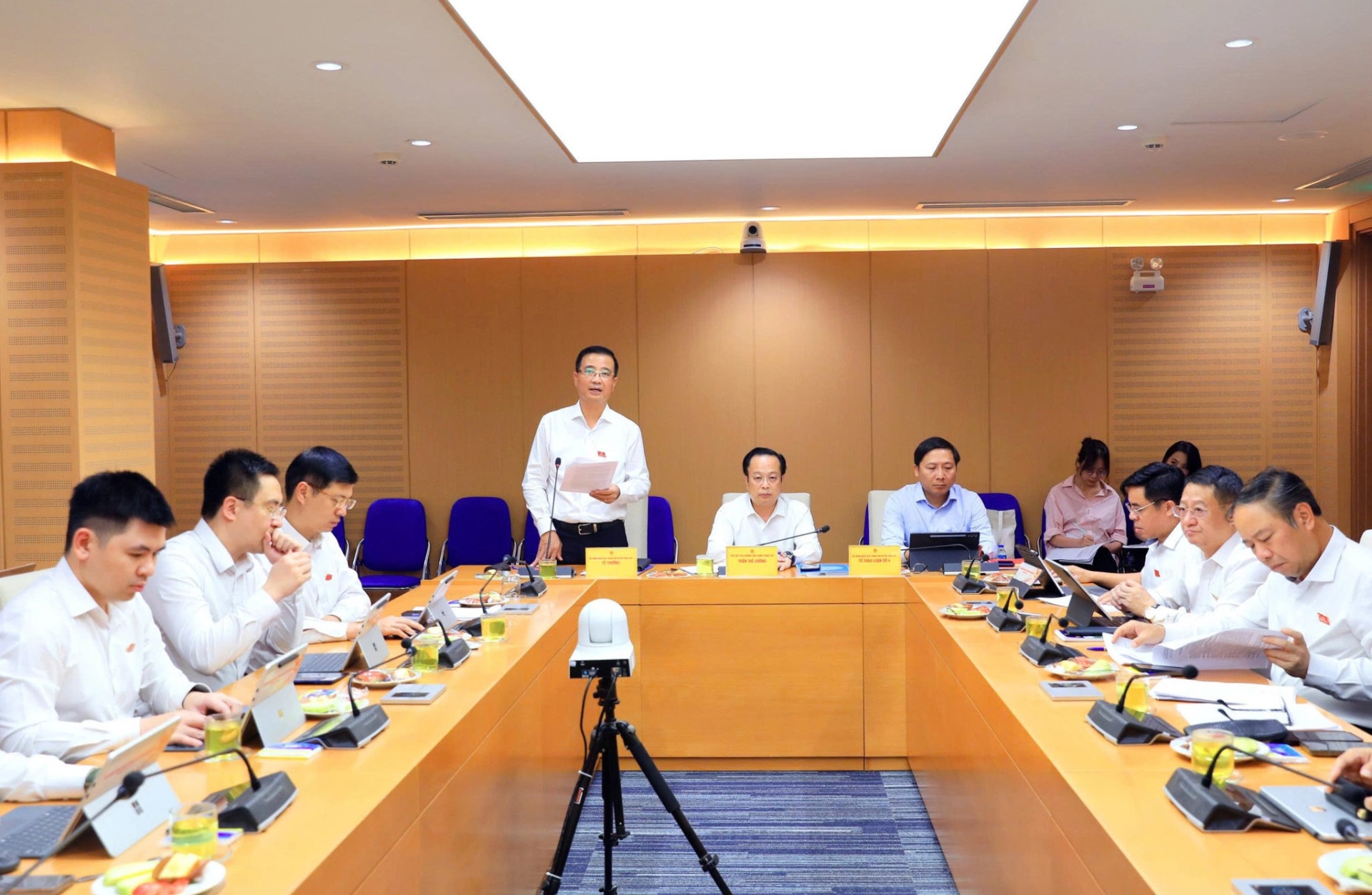
Scene at Discussion Group No. 4. Photo: Thanh Thai
Focus on developing the night economy and "silver economy"
In Discussion Group No. 4, delegates of Hanoi People's Council focused on discussing the draft Resolution on key tasks of socio-economic development in 2026. From the reality of socio-economic development in the first 6 months of the year, delegates said that in the last 6 months of 2026, there must be drastic solutions and scenarios to accelerate growth.
Delegate Do Vinh Quang (Delegation Group No. 30) proposed the need for tools and solutions to measure specific results of each field that makes an important contribution to the city's GRDP. From there, the true spirit of "6 clarity" is demonstrated throughout, ensuring the effectiveness of the resolution. The delegate also suggested the need for in-depth research on the "four" pillar resolutions of the Politburo, on the basis of which the city proposes superior and breakthrough policies to create motivation for development.
Delegate Do Vinh Quang is interested in two groups of fields that will make important contributions to the economic growth of Hanoi Capital in the coming time: developing care services for the elderly, encouraging the use of elderly labor (silver economy) and developing the night economy. Delegates suggested that these policies must be close to reality, realistic and accessible, especially for small and medium-sized enterprises, creative startups, digital transformation...
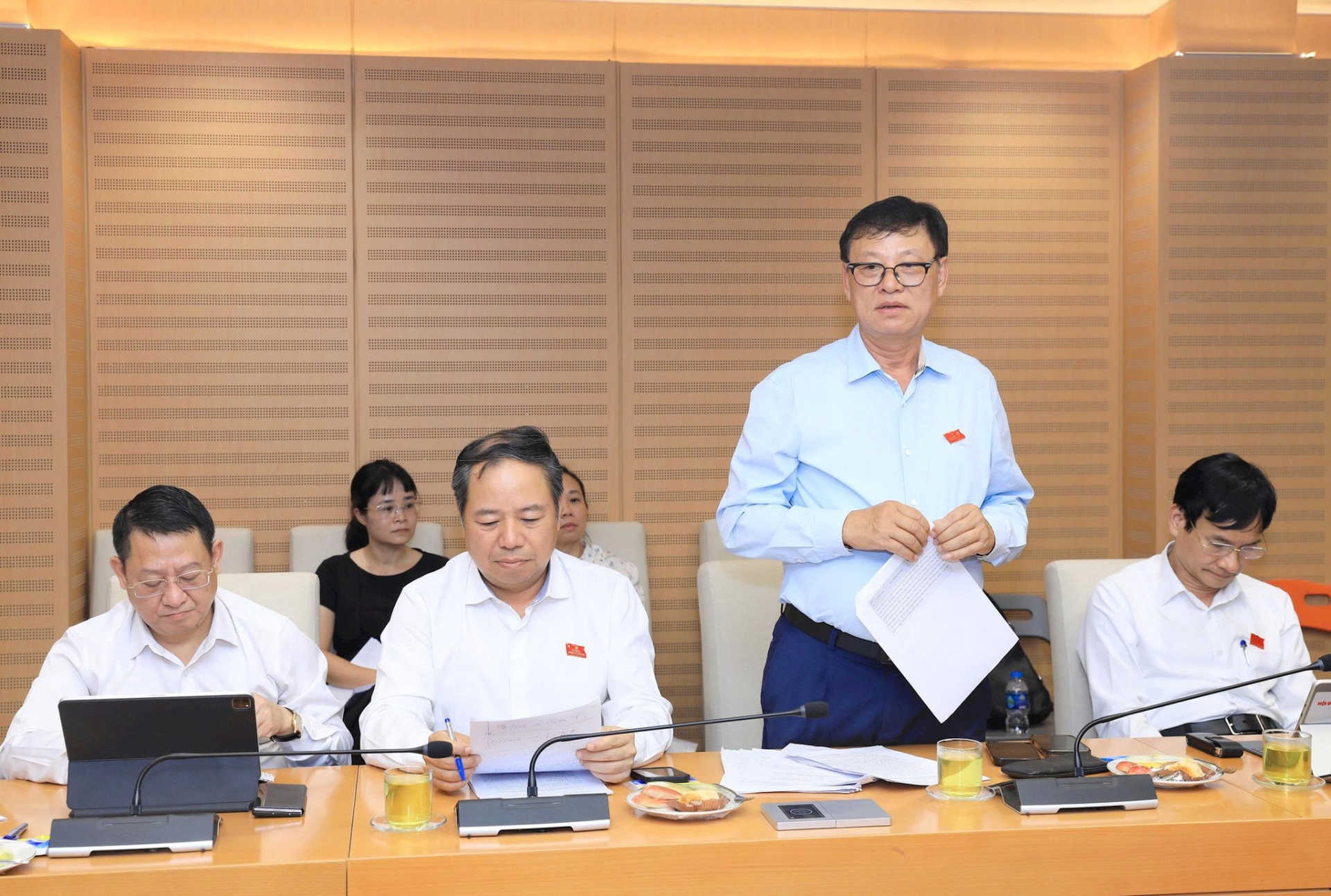
Delegate Nguyen Huu Chinh spoke at the discussion. Photo: Thanh Thai
To achieve the growth target in 2026, delegate Nguyen Huu Chinh (Delegation Group No. 8) suggested focusing on removing difficulties and obstacles in site clearance, accelerating disbursement of public investment capital, prioritizing key projects... Delegates recommended increasing support for businesses, especially young businesses and new businesses expanding export markets; Increase localization rate, reduce dependence on imported raw materials.
Regarding the development of industry, commerce, tourism, and services, delegates suggested the need to stimulate consumption, develop the night economy, digital economy, improve the quality of tourism products, and support high-tech industry...
Delegate Vo Dang Dung (Delegation Group No. 7) said that it is necessary to research and propose regulations, mechanisms and policies to develop the night economy, thereby promoting economic development in general to achieve the set growth targets. "Abroad, all night economy spots or tourist attractions, handicraft products are sold in large quantities and sold at very high prices. Meanwhile in our country, night economy spots, centers, cultural and tourist attractions, commercial products, and handicraft service products have not been properly developed," the delegate said.
Delegate Vo Dang Dung suggested that attention should be paid to developing cultural industry, developing heavy industrial production, promoting the development of science and technology... so that these fields contribute a high proportion to the economy.
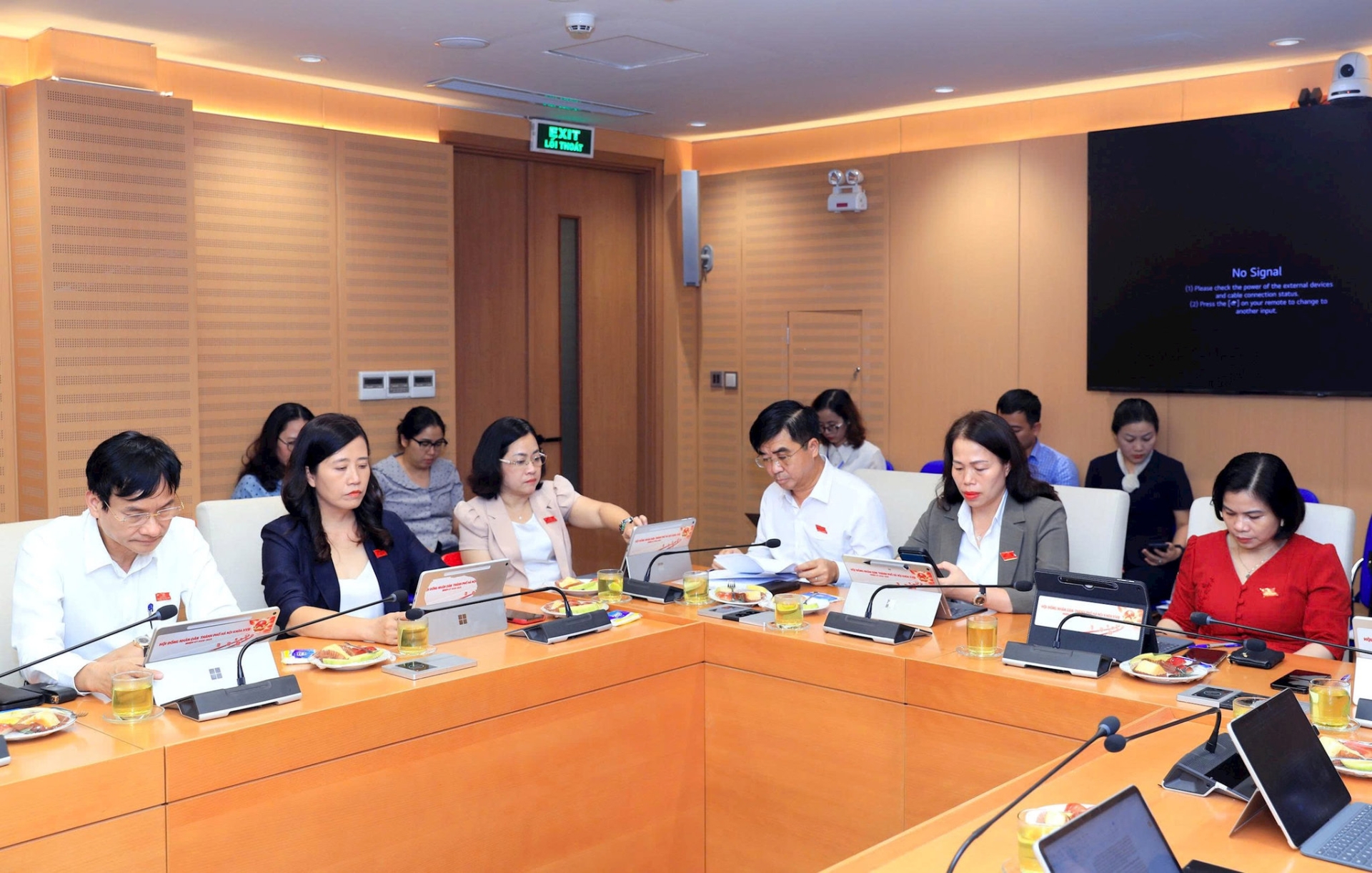
Delegates at Discussion Group No. 4. Photo: Thanh Thai
Propose to assign growth KPIs to units and localities
To achieve double-digit growth efficiency, delegate Hoang Anh Tuan (Delegation Group No. 30) suggested that the City People's Committee assign work according to KPI, like assigning the task of disbursement of public investment capital to each industry, unit, and locality in implementation.
In order for Resolution No. 71-NQ/TW, Resolution No. 72-NQ/TW and Resolution No. 80-NQ/TW to truly have products and come to life, delegate Hoang Anh Tuan suggested that existing models need to be replicated; Units, communes and wards need to proactively build models to implement, ensure quick and effective implementation, and evaluate the construction of national standard schools; Instructions on implementing the cultural institution model at the grassroots level.
Delegates of Discussion Group No. 4 also proposed to fully evaluate the completion level of each key project, disbursement capacity, site clearance progress, difficulties in the implementation process and the direct impact of each project on economic growth; Strengthen inspection, supervision, and resolutely transfer capital to projects that are slow in implementation, slow in disbursement, or no longer able to be completed as planned.
Delegate Nguyen Thi Lieu (Delegation Group No. 5) proposed to review and evaluate the effectiveness of the post-issued resolutions in terms of being consistent with reality and meeting requirements during the implementation process for timely adjustments.
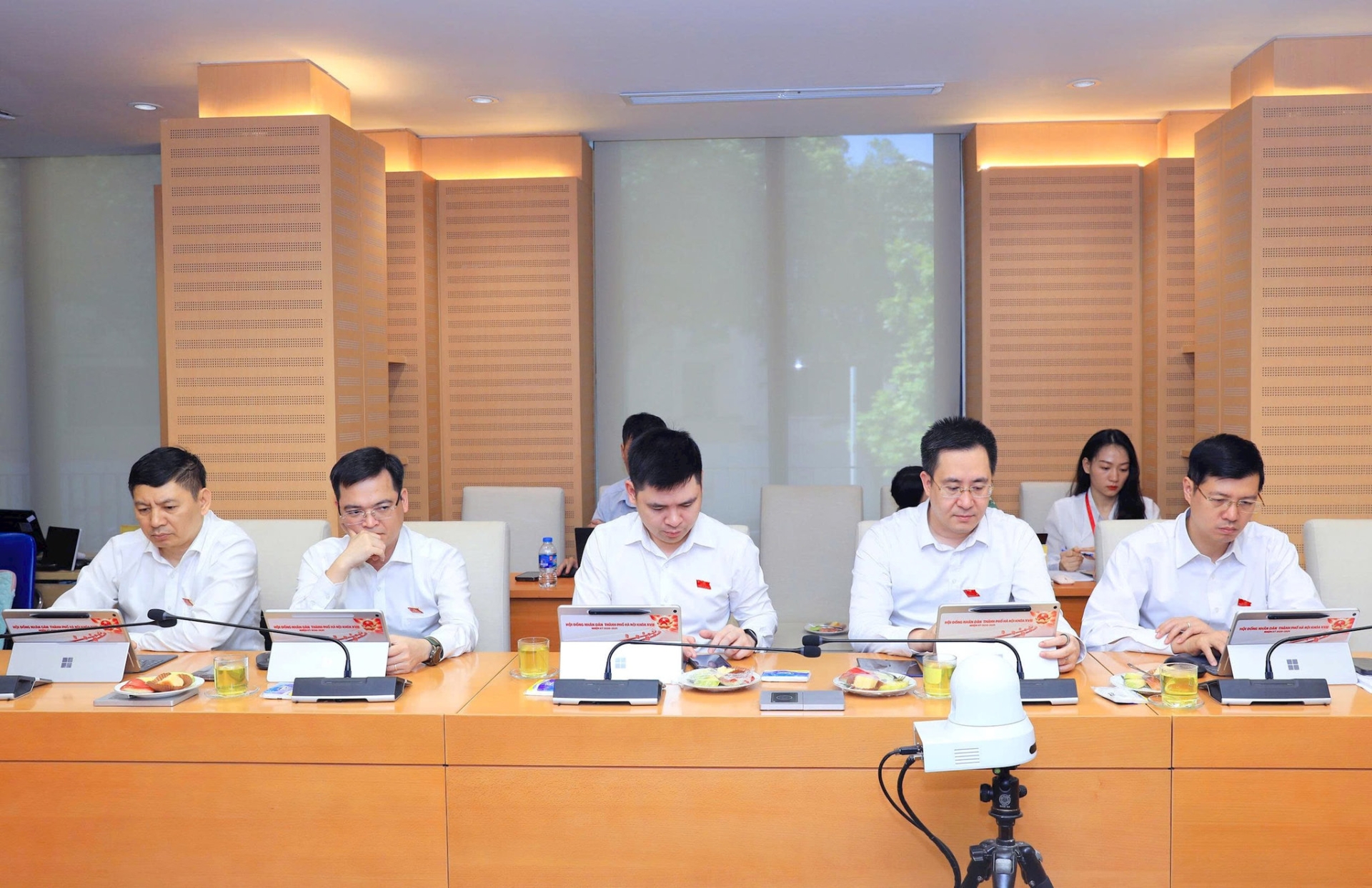
Delegates at Discussion Group No. 4. Photo: Thanh Thai
Regarding the arrangement of public preschool, general, continuing education and vocational education facilities in the city, delegates said that to ensure streamlining and conformity with Hanoi's reality, the rate of reduction of public educational establishments compared to July 1, 2025 needs to be consistent with the socio-economic development planning, population size, and specific development space of the Capital to achieve the highest efficiency.
Discussing regulations on supporting career change and job creation in the form of allocating service land and residential land to handle problems in some communes and wards, delegate Bui Van Sang (Delegation Group No. 20) said that this is a very humane regulation. If approved by the City People's Council, the Commune People's Committee will be responsible for organizing the implementation, responsible for the subjects, arranging infrastructure, and land fund to deploy land allocation to households.


